
6 Silk Screen Printing Ideas to Elevate Your Packaging Design
- ByRobert "Rob" Starmann
- June 5, 2026
Your label looks great on day one. But by month three, it's peeling at the corner, bubbling from humidity, or fading under the lights.
Silk screen printing on packaging containers prevents these issues. The ink cures directly into the container surface, so there's no adhesive to fail, no edges to lift, and no print that degrades six months into a retail cycle.
Ashland Container has been doing this for over 50 years, offering in-house silk screen decorating across materials, formats, and production scales. We can confidently say that durability is just one piece of the puzzle. What most brands don't realize is how many creative directions this technique opens up.
6 Attractive Silk Screen Printing Ideas for Your Packaging
Are you planning to treat screen printing as purely a functional step? That’s a mistake. This goes beyond putting a logo on a bottle and moving on. The technique supports a much wider range of creative and strategic approaches. The following six silk screen printing ideas reflect how brands (and even your competitors!) are using this method to improve their packaging.
Single and Multi-Color Brand Printing
This is the foundation of most screen printing project ideas. A single-color print of a logo or wordmark is clean, cost-effective, and works well on both simple and premium packaging. Personally, we love multi-color printing. It adds depth and allows for accurate brand color reproduction across a product line. But each color requires a separate screen pass, so be aware. The complexity and cost scale with the number of colors, typically up to four per run for most packaging applications.
Specialty Inks and Interactive Effects
This is where screen printing moves beyond decoration into brand experience. Specialty inks change what your packaging does:
- Thermochromic inks shift color in response to temperature. We recommend this for beverages or products where serving temperature matters to the consumer.
- UV-reactive inks are invisible indoors and reveal a hidden design or message in direct sunlight. It’s a strong option for limited-edition or promotional packaging.
- Glow-in-the-dark inks create an effect that works well for specific consumer categories or seasonal campaigns where standing out after dark is the point.
- Matte and gloss contrast can be achieved by combining finish types on a single container, adding texture and visual dimension without adding color.
Limited Edition and Seasonal Runs
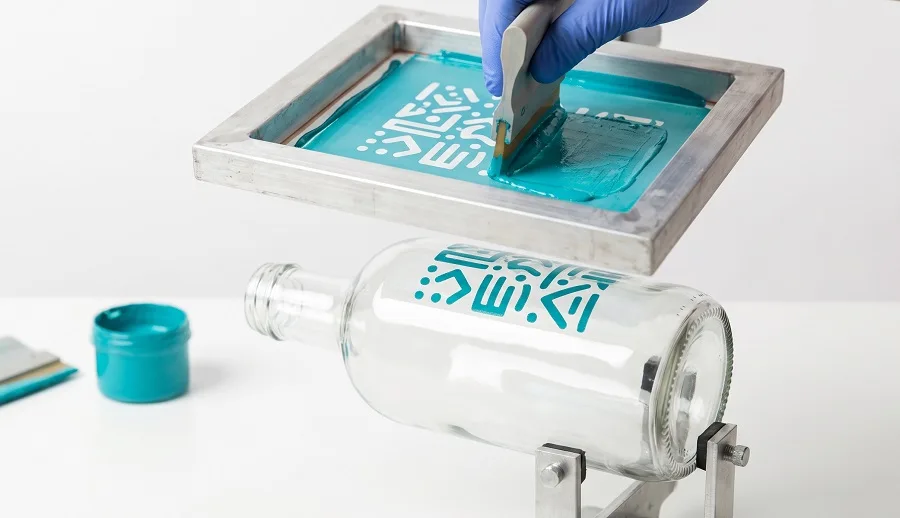
This is a huge perk. Screen printing supports short-run customization without requiring new tooling. Just by changing a color or switching a design element on the same container format, you can create a seasonal collection, a product launch variant, or a limited-edition release. We recommend this to clients who want to create urgency around a launch without overhauling their entire packaging setup. Because the setup cost is fixed, per-unit economics improve as volume increases, making short campaigns more viable than they might initially appear.
Storytelling Across a Product Line
Every unit of a product carries the same print. That consistency is a huge asset. Some brands use it to build a visual system across a line, where each SKU carries a different element that connects to the others, like a color family, recurring graphic motif, or serialized design that reads differently on each variant. This becomes practical with screen printing because registration and color accuracy are repeatable at volume.
Campaign and Collaboration Packaging
Do you have a collaboration or cause you want on your packaging? Screen printing makes it happen fast. Co-branded designs, cause-related packaging, and event-driven containers all come together with relatively short lead times. Plus, the brand partnership shows up directly on the container surface, not on a sticker. Cause-driven designs on packaging have been shown to strengthen customer loyalty when the connection feels genuine. Screen printing makes these ideas executable at production scale.
Interactive Packaging
This approach works especially well for brands that want to extend the customer relationship past the point of purchase. You can turn a static package into a connection point with the customer with a QR code printed directly onto the container’s surface. Because the print bonds permanently to the surface, the code stays clean and legible through the full product lifecycle, unlike a label that can peel or smudge before the product even reaches the shelf.
What that code links to is the creative decision. We’ve seen brands use it to direct customers to product tutorials, for ingredient sourcing stories, loyalty programs, behind-the-scenes content, or augmented reality experiences that activate through a mobile app. For instance, a spirit bottle can link to a cocktail guide, a skincare container can link to a routine video, and a supplement jar can link to a dosing calculator or a refill subscription.
#cta_start
Let’s Make Your Print Last as Long as Your Packaging
Talk to Ashland Container about silk screen decorating for your next run. We will match you with the right solution for your container, material, and production scale.
#cta_end
What Silk Screen Printing Type Works Best for Your Container
Not every container takes ink the same way. The material you're working with affects adhesion, color vibrancy, and how long the print holds up. Here is a quick reference for the most common packaging substrates.
Bring Your Packaging Ideas to Life
If you have a container and a brand that needs to show up on the shelf, share your specs, and Ashland Container will figure out the rest together. Not sure which ink system fits your container? Our team can help you confirm the material and match you with the right decorating approach before production starts.

Recent Posts

How to Select the Best Plastic Bottle for Your Liquid Product
Learn how to choose the best plastic bottle for liquids by comparing materials, shapes, functionality, and labeling — ensure you make the right packaging choice with Ashland Container’s help.

How to Measure the Neck Finish of Your Bottle or Cap
Stop guessing bottle cap sizes! Check out 5 critical measurements to avoid costly production shutdowns in Ashland Container’s expert guide.
Benefits of Clear Containers: Why Transparency Matters
Explore the benefits of clear plastic packaging and how it boosts brand visibility, trust, and safety, based on Ashland Container's 50+ years of experience.