
How to Select the Best Plastic Bottle for Your Liquid Product
- ByRobert "Rob" Starmann
- April 6, 2026
The plastic bottle you choose for your liquid product is critical to your product's performance, consumer experience, and shelf appeal — the right plastic bottle solution affects everything from stability and usability to branding and sustainability.
Ashland Container has guided brands in food, beauty, and industrial markets for decades toward smarter packaging. With expert insight into plastics, usability, and compliance, we help you make confident choices that support product and brand success.
Choosing the Right Materials for Liquid Plastic Bottles
Material properties determine whether your product thrives or fails on the shelf. Each type of plastic offers distinct advantages in terms of chemical resistance, clarity, weight, and recyclability. Here are some considerations:
Always conduct compatibility testing with your specific formulation when selecting materials, as individual ingredients can interact differently with plastic polymers.
Cost Analysis of Plastic Materials
It’s no surprise that material costs can significantly impact your total packaging expenses, especially for high-volume products. Presented costs are relative and vary based on market conditions, quantity, and processing requirements.
Consider not only the compatibility with your product, but also factors like shelf life, intended use (single or multiple), and regulatory requirements.
Design for User Experience: Ergonomics and Aesthetics
Smart design creates competitive advantages that consumers notice with every use. The physical interaction between consumers and your packaging determines daily usability and long-term brand loyalty.
Ergonomic Design Fundamentals
Key ergonomic factors influencing user experience include grip comfort, weight distribution, and dispensing control. The table below outlines critical design parameters:
Common opening sizes: Thin liquids: 18-28mm / thick liquids: 38-63mm / powders: 63mm+.
These ranges represent the most common applications but don't account for all product variations and specialized dispensing requirements.
Bottle diameter directly affects user comfort — products exceeding 2.5 inches require two-handed operation, while bottles under 1 inch become difficult to grip securely, especially when dispensing applications require precision.
Visual Design and Brand Impact
Your bottle is a visual extension of your brand, but design choices must balance aesthetics with practical considerations. Modern consumers gravitate toward clean lines, matte finishes, and minimalist design. Transparent bottles signal purity, while custom shapes help premium brands differentiate themselves.
- Labeling considerations: Bottle contours and surface texture impact label application. Smooth PET bottles offer ample space for wraparound designs. Embossed surfaces or small diameters may limit label visibility or require shrink sleeves.
- Shelf presence: Standardized sizes like 16 oz and 32 oz often reduce shipping costs and simplify retail storage requirements. While unusual shapes may help your product and brand stand out on the shelves, they could introduce compatibility issues on existing production lines and logistics systems.
Usage Context and Application-Specific Considerations
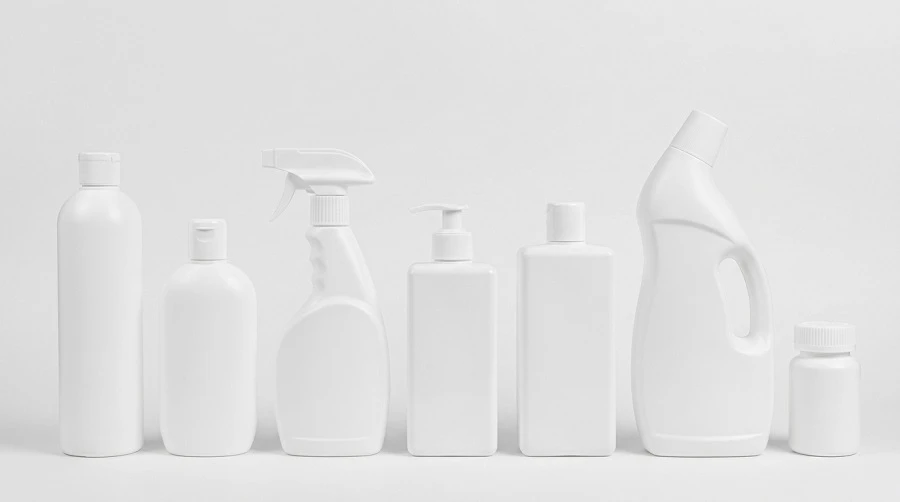
Understanding how consumers will interact with your product determines how to select the optimal bottle:
- Refillable products: Require durable materials and wide openings for easy refilling. HDPE and PP work well for repeated use scenarios.
- On-the-go use: Demands lightweight, squeeze-friendly materials with secure closures. LDPE bottles with sport caps excel in mobile applications.
- Multi-product sets: Benefit from consistent sizing and compatible materials that stack efficiently and present cohesively on shelves.
- Wet environment use: Cylindrical bottles with textured grips work exceptionally well in bathrooms and kitchens where hands may be wet or slippery.
- Precision dispensing: Wide-mouth bottles improve pouring and measuring for thick liquids, while narrow openings provide better control for thin products.
Industry Examples with Packaging Pitfalls to Avoid
Example 1. Beverage Product in PET:
A flavored water brand chooses clear PET bottles for shelf appeal. However, under retail lighting, UV exposure degrades taste. A tinted or UV-resistant PET could prevent this.
Example 2. Industrial Degreaser in HDPE:
A chemical product in a smooth HDPE bottle proves hard to grip for technicians in gloves. A textured surface and wider neck would improve usability.
What to Consider When Choosing a Bottle
- Storage conditions: Heat, light, humidity.
- End user context: Gloves, wet hands, refill needs.
- Dispensing control: Viscosity, opening size, closure type.
- Shelf visibility vs. product protection: Clear bottles attract attention but reduce UV protection.
Choosing without context creates friction, and friction loses customers.
Environmental Impact: Making Sustainable Packaging Choices
Sustainability considerations are increasingly important in packaging decisions. Despite plastic comprising 12.2% of all municipal solid waste, it represents only 4.47% of total recycled materials, revealing a critical gap that forward-thinking brands can (and should) address.
Incorporating sustainability doesn't have to compromise performance — it can elevate your brand by aligning with consumer values.
Regulatory Compliance and Standards
Compliance with federal and state regulations is essential for legal market entry and consumer safety. Understanding these requirements early in the selection process can help avoid expensive redesigns and ensure market compliance.
FDA Food Contact Materials Regulations
According to the Federal Food, Drug and Cosmetic Act (FFDCA), all food contact substances must comply with regulations in 21 CFR Parts 174-179. Based on current FDA guidelines, only nine specific phthalates are authorized in food packaging. BPA is prohibited in infant formula packaging and baby bottles under specific CFR sections.
EPA Chemical Container Standards
The Environmental Protection Agency regulates chemical containers under FIFRA, with requirements outlined in 40 CFR Part 165. According to EPA standards, these establish specifications for pesticide containers and proper labeling. Based on recent EPA enforcement actions, new PFAS regulations prohibit certain chemicals that leach from fluorinated plastic containers.
CPSC Child-Resistant Packaging Requirements
According to the Consumer Product Safety Commission, child-resistant packaging standards under the Poison Prevention Packaging Act are codified in 16 CFR Part 1700. Based on ASTM D3475 standards, different closure types include push-turn, squeeze-turn, and snap-closure mechanisms. Testing requires that 85% of children aged 42-51 months cannot open packages within 5 minutes.
State and International Compliance
Beyond federal requirements, state regulations add compliance layers. According to California's Health and Safety Code, there is a maximum 0.1 ppb BPA limit in food contact bottles for children under 3. Based on ISO 8317:2015 standards, international child-resistant packaging requirements are established. Companies planning global distribution have additional regulatory and compliance hurdles to overcome.
Making Your Final Decision
There’s no cookie-cutter approach to success. Selecting the best plastic bottles for liquids requires balancing material compatibility, ergonomic design, aesthetic appeal, and environmental impact. Each decision influences product performance, consumer satisfaction, and long-term brand success in competitive markets.
Testing and Validation Process
Fill prototype bottles, apply proposed labels, and simulate real-world usage scenarios to identify potential issues. This validation phase prevents costly production mistakes and ensures optimal user experience.
Essential testing protocols include:
- Compatibility testing: 30-90 day storage tests with actual product formulation.
- Drop testing: Simulate shipping and handling stress.
- Temperature cycling: Test performance across expected storage conditions.
- UV exposure: Assess color stability and material degradation.
- Closure torque testing: Ensure consistent opening/closing force.
Don’t Just Bottle It — Build Trust, Stability, and Sales!
One wrong choice can sink your product, from chemical stability to regulatory pitfalls. Skip the trial-and-error approach and get professional guidance from Ashland Container to select the right bottle for your liquid product now.
Plan for Tomorrow's Requirements
Whether launching a cosmetic line or selling industrial cleaners, our team at Ashland Container helps you select bottles that protect, impress, and comply. This is an essential decision that can impact the trajectory of your brand; don’t leave it to chance! Schedule your free consultation today to discuss your needs and discover the perfect solution that supports your product performance and brand growth objectives.

Recent Posts

How to Measure the Neck Finish of Your Bottle or Cap
Stop guessing bottle cap sizes! Check out 5 critical measurements to avoid costly production shutdowns in Ashland Container’s expert guide.
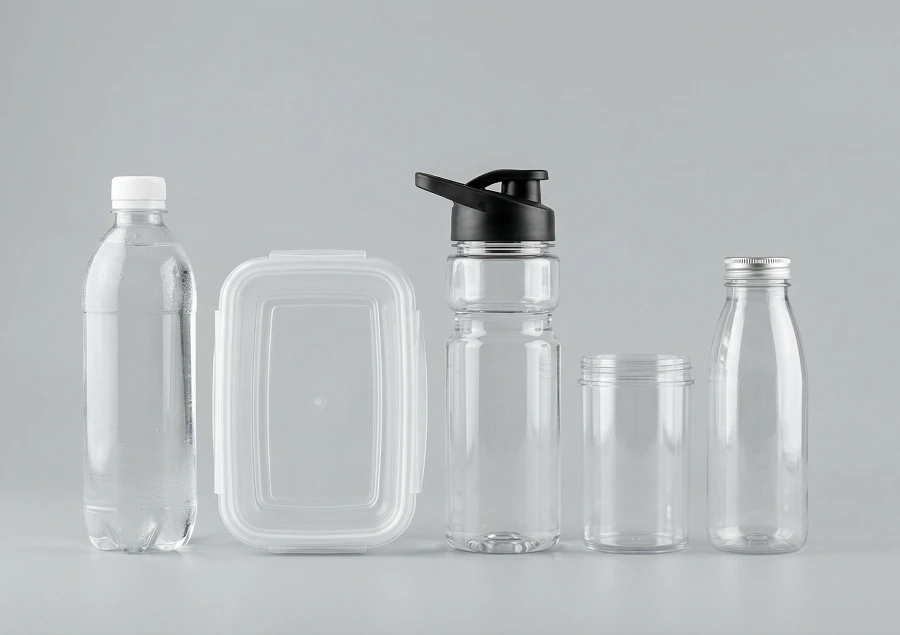
Benefits of Clear Containers: Why Transparency Matters
Explore the benefits of clear plastic packaging and how it boosts brand visibility, trust, and safety, based on Ashland Container's 50+ years of experience.
Packaging Compatibility Testing: Your Guide to Packaging Quality Assurance and Standards
Prevent recalls and protect customers with packaging compatibility testing methods and standards that keep packaging safe and reliable with Ashland Container.