
Anatomy of a Bottle: Complete Guide to Bottle Parts and Components
- ByRobert "Rob" Starmann
- February 24, 2026
According to a report, packaging compatibility issues alone contribute to an estimated 20 percent of manufacturing delays. These issues often arise from mismatched finishes, incompatible materials, or overlooked dimensional tolerances — all of which can be addressed through a better understanding of bottle anatomy.
A breakdown in packaging alignment can stall production lines altogether, leading to costly interruptions and lost revenue. Research shows that incorrect bottle specifications lead to equipment failures, seal integrity problems, and expensive product recalls.
As a plastic container supplier with over 50 years of industry experience, Ashland Container created this guide to help you navigate these complexities and avoid the billions lost annually to unplanned downtime.
Understanding Bottle Anatomy: The Essential Components
Every bottle, whether plastic or glass, has structural elements influencing filling, sealing, labeling, and usability. Knowing these parts enables more effective supplier communication and accurate packaging specifications.
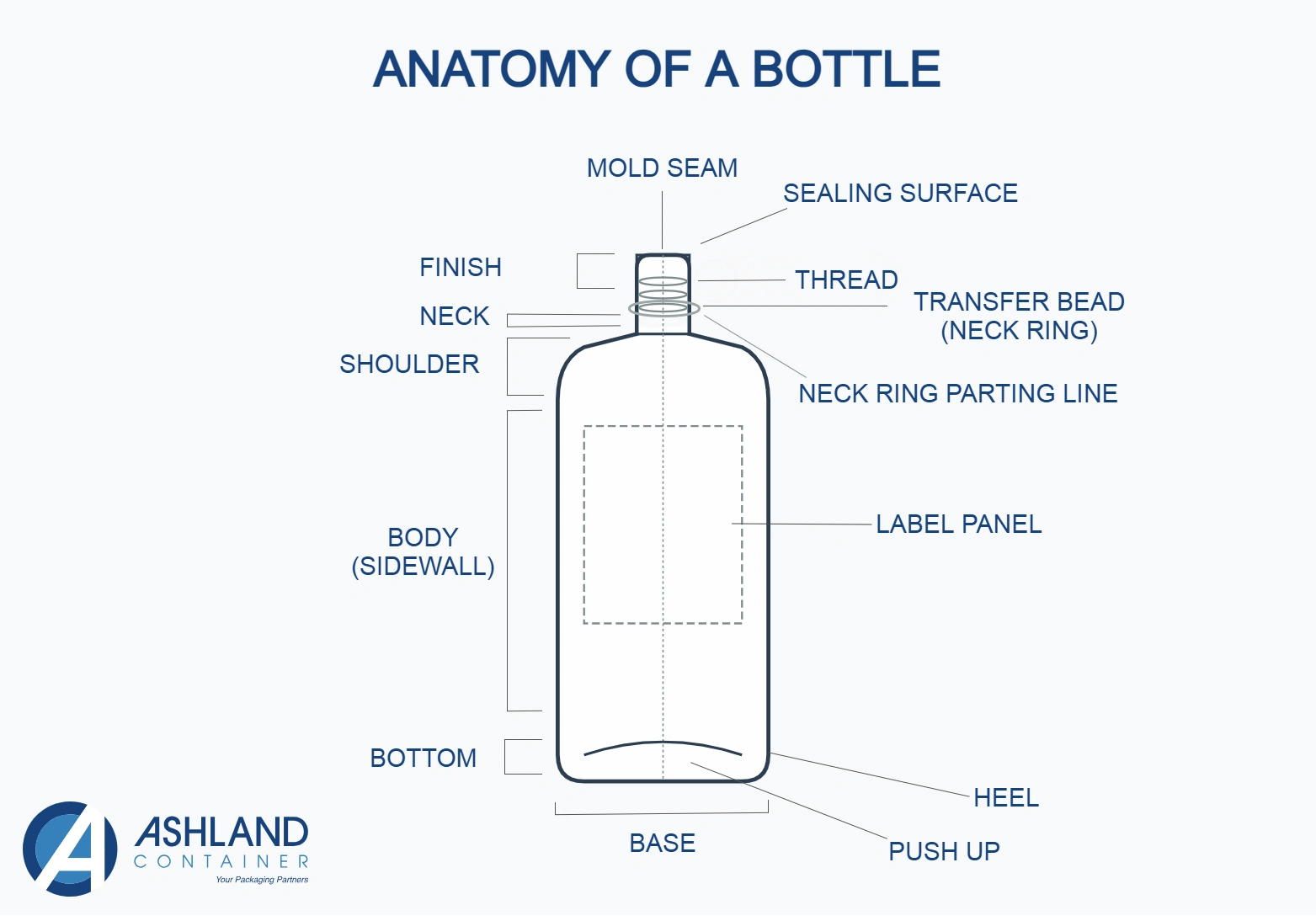
Bottle anatomy consists of five main areas: the finish, neck, shoulder, body, and bottom. Each section serves functional and aesthetic purposes that affect your product's usability and appeal. Modern bottle design supports automated filling, precise closure torque, and supply chain durability.
The Finish: Where Function Meets Form
The finish is the most critical section for packaging compatibility. This threaded top determines closure fit, seal quality, and torque application.
Key elements of the finish include:
- Sealing surface: The flat area that contacts the closure liner. Any imperfections may cause leaks or contamination.
- Thread configuration: The spiral ridges that secure closures. Thread pitch and profile (e.g., 400, 410) define closure compatibility.
- Transfer bead: A ridge at the finish base that aids automated handling and may support tamper-evident features.
The finish style is essential. The wrong choice can halt production or cause closure failures. Always confirm finish dimensions and test with closure samples.
Neck and Shoulder: Performance and Pouring
The neck connects the finish to the bottle body. It impacts filling speed, closure options, and label space. Wider necks support faster fills but require precise finish selection.
The shoulder provides the transitional slope between the neck and body. Its design affects:
- Pour control: Steep shoulders = faster pours; gradual = controlled flow.
- Labeling and branding: High-visibility area is often used for embossed logos or label accents.
These upper parts are functional and brand-facing — getting them right from the jump improves user experience and perceived product quality.
Body and Label Panel: The Product Showcase
The body holds your product and supports your brand. These specifications impact both aesthetics and protection.
Here are some considerations for this section:
- Wall thickness: Influences structural integrity and barrier performance.
- Label panel: Flat zones designed for label adhesion. Prevents wrinkling and ensures clean presentation.
- Volume specifications: Standard fill vs. overflow capacity; affects regulatory compliance and visual fullness.
- Material behavior: Glass maintains even wall thickness; plastic may vary for weight and strength optimization.
Bottom Components: Stability and Compliance
Though often overlooked, the base of the bottle ensures stability and accommodates regulatory markings.
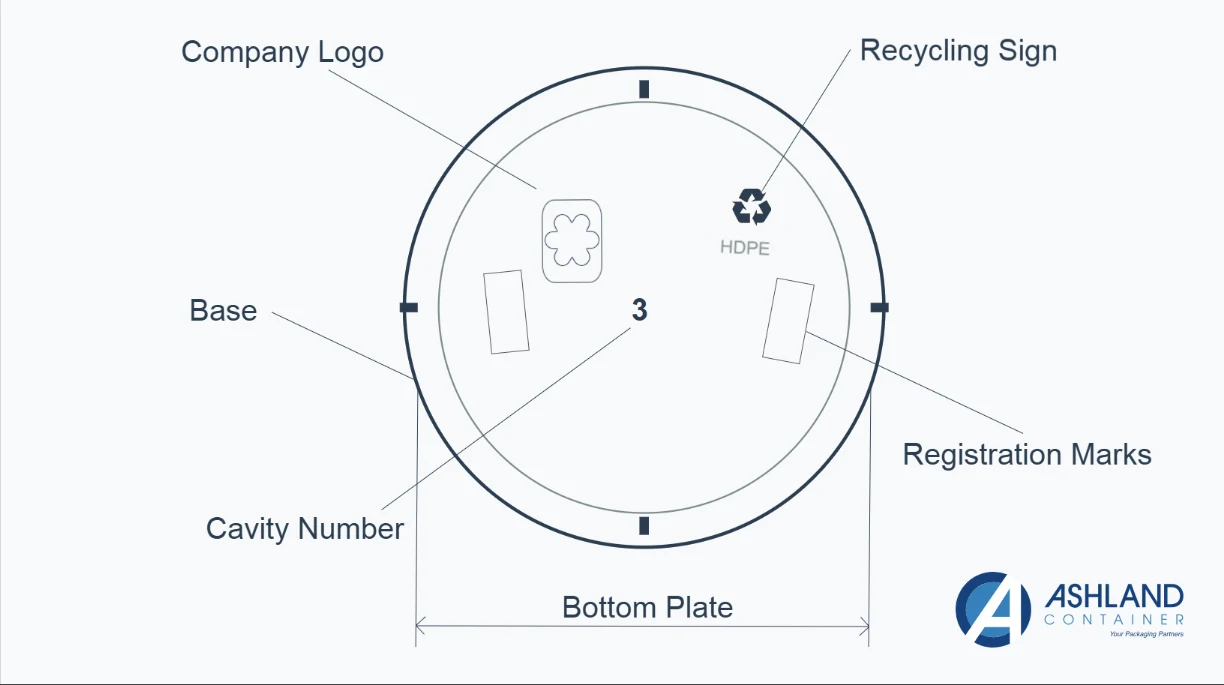
The main bottom elements:
- Base ring: Ensures level standing and performance on conveyors.
- Heel: Curved section joining sidewall and base. Designed for strength under impact.
- Pushup: Concave dome that reinforces structure and creates space for embossed codes.
- Markings: Include cavity numbers, recycling symbols, and brand identifiers. Essential for traceability and compliance.
Industry-Specific Bottle Anatomy Requirements
Different industries have unique requirements for bottle parts based on regulatory standards, product characteristics, and end-use applications. Understanding these specifications helps guarantee your container meets industry-specific performance criteria and provides peace of mind.
Regulatory Considerations
FDA-Regulated Products: Pharmaceutical and food containers require specific bottle anatomy features for traceability, including space for lot codes and expiration dates on the base or shoulder areas.
Hazardous Materials: Chemical products need reinforced bottle parts, particularly thicker body walls and specialized finish designs that accommodate safety closures and dispensing controls.
International Markets: Different regions may require specific bottle anatomy modifications, including metric sizing, multilingual base markings, or region-specific closure compatibility.
These industry-specific requirements help you select appropriate bottle specifications and avoid costly redesigns during product development.
Quality Control: Inspection & Troubleshooting
A good design is only as good as its execution, and quality is everything regarding your brand’s reputation. Knowing bottle anatomy improves QC protocols and solves issues faster.
Key inspection points:
- Finish: Check threads and sealing surface for defects.
- Body: Verify wall consistency and absence of deformation.
- Base: Confirm pushup depth and marking legibility.
Troubleshooting tips:
- Match cap torque to finish style
- Confirm sealing surface is smooth and flat
- Test actual closure compatibility before full production
Find the Perfect Bottle Anatomy with Ashland Container
When you truly understand how bottles work, smart packaging decisions become second nature and production runs smoothly. This knowledge of bottle parts helps you communicate effectively with suppliers, specify requirements accurately, and avoid compatibility issues. Here are some main takeaways to keep in mind:
- Choose the correct finish to match closures
- Design for controlled pouring or fast dispensing
- Select the proper wall strength for transit and stacking
- Plan space for logos, dates, or regulatory codes
These decisions may not seem integral, but they prevent downtime, returns, and packaging failures.
Expanding your understanding of bottle anatomy gives you the tools to make smarter packaging decisions at every step of development and production. From choosing finishes that prevent leaks to designing bottle bodies that enhance product appeal and line efficiency, this knowledge empowers your entire packaging strategy. With fewer compatibility errors, faster time to market, and better end-user experiences, it's not just about parts — it's about performance, compliance, and consumer trust.
Ready to Source Your Perfect Bottle?
Now that you understand bottle anatomy, let our expert team help you find containers that match your specifications. We'll ensure every component meets your functional and aesthetic requirements.

At Ashland Container, we help businesses navigate the complexities of bottle anatomy and find containers that perfectly match their requirements. Our team understands how each component affects performance and can guide you toward optimal solutions. No matter the industry, we’re here to help.
Ready to put this bottle anatomy knowledge to work? Contact us today for expert guidance on selecting containers that meet your specifications and performance requirements.

Recent Posts

Enhance Your Beauty Product: Choosing the Right Cosmetic Tube Materials
Choosing the perfect cosmetic tube can be difficult. Let Ashland Container help you with tube types, design options, and enhance your brand's appeal.

How to Prevent Plastic Bottle Paneling and Save Your Brand
Learn how to prevent plastic bottle paneling and protect your brand image! Our guide covers material selection & testing. Get expert help from Ashland Container!

Nutraceuticals Product & Packaging Trends for 2026
Explore the latest nutraceutical packaging trends for 2026. From sustainable designs to smart packaging innovations — stay ahead in the growing wellness market!